Category Archives: Uncategorized

THE HOUSE IS ON FIRE AND THEY’RE STILL SETTING THE TABLE FOR DINNER!

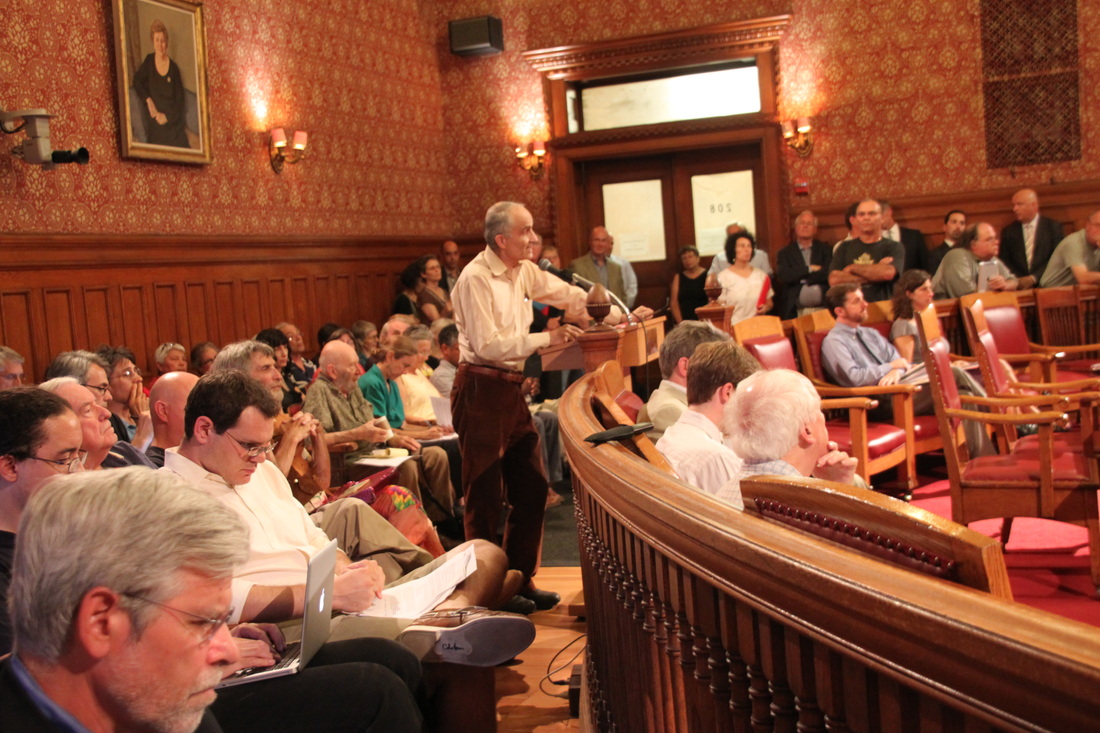
Think your opinion matters? Apparently not to our City Council. A majority of council members voted at an Ordinance Committee meeting to move along MIT’s upzoning petition before the public had a chance to speak its mind. Arguably, it was to allow our mayor, who had another engagement, to record her vote in favor of the petition. But in reality, you couldn’t fabricate a better example to illustrate what the council feels about your opinion or how they’re responding to the over-heating pressures for development in our city.Cambridge-CityCouncil2012-2013

Put simply, they appear eager to ride the rising tide of development with little concern for those of us who may get flooded out. With little concern for the diversity we’ll lose as they vote to bring in wave after wave of affluent renters. Or for families that get squeezed out by the higher neighborhood rents that accompany new market-rate housing. Or for neighborhoods that will suddenly have 14 or 16 story towers reaching into their sky, and thousands more cars clogging their streets.

The sellers of “progress” tell us this is the price we have to pay to get more housing and create a better Cambridge. Housing has become the shield behind which developers and business interests now hide their self-enrichment and self-interest. If you could prove what I postulated in the previous paragraph, that new market-rate housing chases out more families than it makes room for, and erodes diversity, they would still argue that inclusionary housing forgives all sins. And that providing 11-15% low or mid-level affordable housing in a housing development makes up for whatever loss of low- or middle-income residents it eventually chases out of the city.

Now, as the City Council pretends to effectively review a proposal that will add 2.1 million square feet of office, lab and residential space to a city already densely populated and excessively traveled by car, someone needs to shout “STOP!” Someone needs to exhort them, “Don’t agree to anything until you understand we’re facing a tsunami of development over the course of the next 20 years. Don’t agree to anything until you learn and study the consequences we face from projections that predict over 18 million square feet of new offices, labs and residences in the city. Which, according to Cambridge’s own published numbers, breaks down to over 50,000 new car trips daily, plus a similar number of additional commuter trips.

Forget the fact that MIT wants to build a skyscraper in our city, a 300 foot demonstration of their importance. Perhaps an easy way for pro-development votes on the Council to create a precedent for buildings significantly higher than our zoning has allowed to date. Forget the fact that MIT fails to address the problem of its grad student housing shortages, which seriously impacts the availability of affordable housing in Cambridge. Forget the fact that MIT operates like it can get what it wants just because it wants it.

Why would our City Council agree to such massive upzoning when they cannot imagine the consequences of such a decision? Nor can they understand the context of over-development in which they’ll be making their decision. Denise Simmons has commented on the fact that listening to presentations, citizen opinions and opposing viewpoints in a single evening doesn’t lend itself well to making informed decisions.

With the massive impacts that come with massive upzoning petitions, the City Council, as the stewards charged with protecting and guiding our city, need to do their homework. They need to find out how many thousands of car trips and transit trips this level of development would bring? They need to know how many millions of square feet of development the City is facing down the road, so we can sensibly prepare for whatever is coming.

To vote on the MIT petition, or the K2C2 recommendations without looking seriously at the future is like continuing to set the table for dinner even though your senses tell you the house is on fire.

It’s time to stop and think; to slow the rush to development and to rethink dotting the landscape with towers. It’s time to stop and study the future, before we rush headlong into it.

It’s time to say no to mindless development.

Then let’s see what develops.
WHY THE CAMBRIDGE RESIDENTS ALLIANCE MATTERS: The Power of Community Acting as a Bulwark Against the Influence of Money

Take a drive on the Leverett Connector alongside Route 93, and you’ll notice a curious sight. Steve K.There’s a partially-built exit ramp, hanging out from the road; its suddenly halted steel girders and roughened concrete startle you, offend your eye, like the aftermath of an amputation. As if the phantom exit ramp had been brutally excised to prevent a cancer from spreading. Which is true, in a manner of speaking. For this is a ghastly reminder of one of the most ill-conceived highway transit projects never perpetrated—the Inner Belt, which would have sliced through the cities of Somerville and Cambridge to funnel many thousands of cars daily into the City of Boston.

This amputated exit ramp also serves as a mute tribute to the power of an aroused citizenry. For that highway would have been built 42 years ago, and Somerville and Cambridge would have been split in two, had it not been for the raised voices and continuous resistance of an engaged and outraged local community.

Today, we know the cost to a community’s social fabric when you run an elevated highway through the heart of a city, but back then many of these raised voices were denounced as fighters of progress or NIMBY’s (not-in-my-backyard-ers) or advocates of the status quo. When in fact, they were authentic voices of Cambridge sticking up—and speaking up!—for the city they loved.

Today, there’s a parallel situation arising in Cambridge, and once again the sellers of progress, unstoppable and unsuitable development and unbridled profits are railing against a group of citizens who have risen up to demand due diligence and a steady hand on the helm before we chart a ruinous course for Cambridge from which we will never recover.

I am proud to be a member of the Cambridge Residents Alliance. Proud to stand alongside members of the community who have worked tirelessly over the years to serve Cambridge and its residents. People like Nancy Ryan, who has a long history of community service, Jonathan King, an MIT professor and veteran of many citizen initiatives, Cathy Hoffman, who served on the Cambridge Peace Commission, Bill Cunningham, advocate for public housing tenants, Lee Farris, an activist for affordable housing, Rich Goldberg, a leader of the Area 4 Coalition, Steve Kaiser, Traffic Engineer and outspoken critic of the city’s lax transportation study practices, to mention just a few. These people have no bone to pick with progress or appropriate development. But they will not be silenced, or frightened off, by the size of a developer’s war chest, the shrillness of the arguments and accusations made by pro-development forces, or the vision and machinations of Cambridge’s own city management and Community Development Department.

We have witnessed those forces engage in a focused effort to guide a supposedly objective study of Central Square’s future toward recommendations so drastic they endanger the character and livability of the area they’re ostensibly trying to improve.

More to the point, we have witnessed these studies move ahead without anyone—except members of our alliance—conducting studies or collecting information to project the impacts of these recommendations and other projected developments on the city as a whole. Using the city’s own statistics, we have been able to project a minimum of 18 million additional square footage of development—a virtual tsunami of new offices, residences and labs—about to wash over the city during the next 20 years. Plus a minimum of 50,000 additional car trips daily, and 50,000 additional public transit trips—on subways and buses that today have little if any additional capacity.

As we state on our CambridgeResidentsAlliance.org web site…The Cambridge Residents Alliance represents individuals and neighborhood organizations committed to preserving and promoting a livable, affordable, and diverse Cambridge community.

We believe the innovative and creative character of the Cambridge economy derives in part from the multi-cultural, cooperative and inclusive social fabric of our city, which needs to be protected, not dissolved.

We support preserving, enhancing and expanding our public and affordable housing.

We believe the choking up of travel on streets, buses and trains through over-development is not in the interest of the community.

We value sunlight, sky views, and our very limited open community spaces and parks, and seek to limit shadowed canyon-like streets from over-size buildings.

We believe traffic has to be limited to levels such that children can go to and from school and after school activities safely.

We oppose the construction of high-rise buildings designed primarily to make large profits for developers.

We need continuing comprehensive urban planning efforts to improve the quality of life and work for Cambridge residents.

And lastly, like those activists in the 1960’s & 1970’s, we will not be silenced by those who propose development at all costs, who will not learn from the lessons or the amputated highway ramps of the past. Cambridge is a city of people from diverse backgrounds, economic levels, ethnicities and visions. Rather than put any of those parties at risk by serving the vision of taxes-hungry city managers or profit-hungry developers we’re calling for an unbiased citywide study of development and growth issues from which we can fashion a sensible approach to creating a future we all can share.

The Snow That Never Fell

In keeping with the weather report, I thought I’d offer this abridged chapter from my novel “Or So It Seems.” In the novel, the narrator and his son are coming off a disastrous father/son Pinewood Derby. For those of you who have never experienced this annual cub scout event, a Pinewood Derby is a model race car competition designed to showcase the hapless father’s gross ineptitude and abundant insufficiencies. As the scene opens, the recently-separated father is staring at his son who lies asleep in the bed they share on the weekends he has his children, a not so untypical reality for many men in his situation.

Addressing The Question of What Happens To Snow That Never Falls

Yesterday here in Boston it was supposed to snow. The weather forecasters had predicted eight to ten inches with a foot more expected up north. What we actually experienced when everything was said and done was an unseasonably warm day in the upper fifties with the sun shining through high wispy clouds. A day as it turned out where thousands of snow shovels were sold in what was possibly the year’s last frenzy of winter storm panic shopping.

Of course weather prediction is far from an exact science, especially in New England, but there is still something dramatic and momentous about a predicted snowstorm that never arrives.

When I was a child growing up in Brooklyn and would watch snow falling I can remember thinking that snow was some physical substance that collected in the clouds until there was so much accumulated it finally broke through. Almost like a mathematical formula describing the inevitable result of supply exceeding storage capacity.

One time when I was in elementary school we were told a major snowstorm was on the way but like yesterday’s storm it never materialized. I recall wondering if someone might have made a mistake about the amount of snow that had accumulated in the clouds?

Maybe  enough  snow  had  not  yet collected, I reasoned?

Or maybe they were right about the amount of snow piled up but wrong about how much the clouds could hold…?

Well whatever the reason, I was certain that the snow which had been predicted—the snow that did not fall—was still up there, high in the clouds…waiting. Waiting for more snow to collect. Waiting until the clouds were so full and sodden with snow they had no choice but to burst open.

Then of course all the snow would fall down and cover the asphalt streets of Brooklyn in a numbingly soft and pure whiteness.

As a child such simple ideas were the foundation of my understanding about the way things worked. No different, I would guess, from the assumptions and beliefs of most children.

Today when I wander through memories of my father, my mind approaches the subject with that same childlike innocence. And somehow I believe that the love I never received from my father was like the snow that never fell from the clouds. It did not vaporize or cease to exist but was merely held over. Waiting for enough love to collect. Waiting until so much love accumulated it would break through all restraints and finally—freed at last—fall like a gentle snow upon my life and the lives of my children.

As childish as it sounds something in me wants to believe that love builds up in the course of human experience so that if it fails to shower down in one life it will inevitably find release in another.

That same inner part of me knows that the love I share with my children has been made large and overwhelming by the love that never fell from my father’s heart.

That hunger for a father’s love must have colored Dad’s childhood as well, since his father—my grandfather Izzy—was notorious for being a stern and distant parent. Is it any wonder then that Dad, being so unfamiliar with love and how to get it, searched for it so relentlessly outside the boundaries of his family? Searching for it in his work, his friends, even in the company of strange women.

My  father’s  tragedy  was  that  he  never  saw the abundance lying nearby for the treasure that was always beyond his reach.

I believe we are all waiting for snow that never fell. Some of us, the lucky ones, learn to create that snow for ourselves while others only learn to imitate the loveless behavior of their parents.

“Dad,” Mickey mutters, squirming under the covers, “would you turn out the light!”

“In a few moments,” I promise softly. “Turn over now and close your eyes.”

He makes an angry noise and turns over as instructed.

“Thank you, sweetie,” I whisper, tapping him softly on the shoulder.

“Grrr!” he answers.

“I love you,” I tell him softly, almost singing the words.

“I love you, too,” he grunts back with a testy shake of his body.

In scarcely a moment my little boy will be sound asleep again.

Most likely he will never remember waking up.

Most certainly he will never even know it snowed.


Cambridge’s Own Projections Point To Growth Tsunami

(As Reported by Shelley Reiman of Cambridgeport and Paul Steven Stone; statistics compiled by Richard Krushnic)

The chart above was compiled by Richard Krushnic, a community development professional and a member of the Cambridge Residents Alliance. He agreed to research the facts and figures of commercial and residential development slated for construction throughout Cambridge during the next twenty years. I’m not certain how visible the chart will be, given my past failure with posting images, but essentially it details the basis of the Cambridge Resident’s Alliance claims that we are looking at OVER 18 MILLION SQUARE FEET OF DEVELOPMENT coming to Cambridge over the next 20 years.

According to Richard, who used the city’s own figures and projections as the basis of his calculations, we can expect, at a minimum, 18,668,919 square feet of new commercial and residential development. That isn’t some pie-in-the-sky number, but projections developed from a.) what is already permitted, b.) what will be allowed under current zoning, or c.) what has been proposed by the Community Development Department or the Central Square and Kendall Square Advisory Committees. There is every reason to believe all this construction will happen.

The Cambridge Residents Alliance has been pushing for a one year citywide moratorium on all UP-ZONING—not on development or construction, merely on up-zoning—until this bombshell of guaranteed growth can be studied and planned for. It doesn’t take an MIT engineer to see how this “progress” will greatly impact Cambridge and the quality of life for its residents. Given the enormous upward shift in rents such new developments inevitably create, Cambridge’s diverse population can expect to be forced out and replaced by a relatively homogeneous group of middle- and upper-middle class residents. The city will be riddled with very tall buildings; there will be areas of extremely high density, and serious traffic and transit problems will result from such enormous growth.

How can we keep Cambridge livable if none of our leaders or planning-related bodies are willing to say “STOP!” and take a look at what the future is bringing? All we see are bogus committee studies served up to cover the pro-development agenda of the business community and the CDD, while we the people of Cambridge are left to exhaust ourselves fighting back recommendations for projects and buildings totally out of proportion, rhythm or logic to our communities.

Once again, I reiterate this is not a kneejerk NIMBY reaction. This is an honest response to a tsunami of development that anyone with eyes can see darkening our horizon. Look at Richard’s figures, then ask yourself why nobody in a position of leadership is calling for the problem to be addressed, the future to be secured? It isn’t what’s happening in our backyard that has us worried, friends, it’s what’s happening everywhere in our city!

Pretty White Gloves


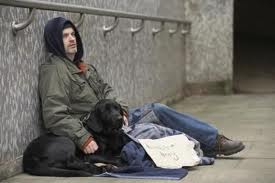
He sits on a folded-over cardboard box, slightly off-balance and without any visible sign of support other than the granite wall of the bank behind him and the few coins in the paper cup he occasionally shakes at passersby.

Does he realize it’s 4 degrees above zero, or minus 25 degrees if you factor in the wind that blows through the city and his bones with little concern for statistics? Does he notice the thick cumulous lifeforms that escape from his mouth in shapes that shift and evanesce like the opportunities that once populated his life? 

Can he even distinguish the usual numbing effect of the cheap alcohol from the cruel and indifferent caress of this biting alien chill? 

Too many questions, he would tell you, if he cared to say anything. But his tongue sits in silence behind crusted chapped lips and chattering teeth while half-shut eyes follow pedestrians fleeing from the bitter cold and his outstretched cup. 

His gaze falls upon the hand holding the cup as if it were some foreign element in his personal inventory. Surprised at first to find it uncovered and exposed, especially in weather this frigid, he now recalls that someone at the shelter had stolen his gloves and left in their place the only option he still has in much abundance.

Acquiescence.

Examining the hand, and the exposed fingers encircling the Seven-Eleven coffee cup, he smiles in amused perplexity, murmuring to himself, “White gloves.” 

Lifting his hand for closer inspection, he adds, “Pretty white gloves.”

An image of his daughter . . . Elissa, he thinks her name was . Yes, Elissa!, he recalls. An image of Elissa rises up in his mind, from a photograph taken when she was ten and beautifully adorned in a new Easter outfit: black shoes, frilly lavender dress and hat and, yes, pretty white gloves. The photo once sat on a table in his living room, but he couldn’t tell you what happened to it, nor to the table or the living room, for that matter. They were just gone. Swept away in the same tide that pulled out all the moorings from his life, and everything else that had been tethered to them.

The last time he’d seen Elissa she was crying, though he no longer remembers why. Must have been something he’d done or said; that much he knows.

“Pretty white gloves,” he repeats, staring at his hand.

He recalls the white gloves from his Marine dress uniform. At most he wore them five times: at his graduation from officer’s training school, at an armed services ball in Trenton, New Jersey, and for three military funerals. There was never a need for dress gloves in Viet Nam. They would have never stayed white anyway; not with all the blood that stained his hands.

Out of the corner of his eye he can see a policeman walking towards him and instinctively hides his cup, some vestige of half-remembered pride causing him to avert his gaze from the man’s eyes at the same time.

“We need to get you inside, buddy,” the officer says. “You’ll die of cold, you stay out here.”

Moments later, a second police officer, this one a woman, steps up to join them.

“That’s the Major,” she tells her colleague. To the seated figure she offers a smile.

“You coming with us, Major?”

“Go away,” he answers, looking up as he leans further against the cold granite wall. “Don’t need you. Don’t need no one.”

“Can’t leave you out here,” the first officer says. “We’ve got orders to bring you and everyone else in.”

“Leave me alone!” the seated man shouts, gesturing with his hands as if he could push them both away.

“Oh shit,” the female officer says under her billowing breath. To her partner she whispers, “His hands. Look at his hands.”

Quickly recognizing the waxy whiteness for what it is, the officer shrugs, “Guess we’re a little late.”

To the man on the sidewalk, he offers, “That’s frost bite, buddy.” 

“No,” the seated man protests. He holds up both hands, numb and strange as they now feel and offers a knowing smile of explanation.

Just like the marine officer he once was, just like the sweet innocent daughter he once knew, just like the young man grown suddenly old on a frozen sidewalk, his hands are beautiful and special in a way these strangers will never understand.

“White gloves,” he insists proudly. 

“Pretty white gloves.”


“Pretty White Gloves” is a story I wrote years ago, and published in my book “How To Train A Rock”. I thought of it again last week when it was five degrees outside; no weather in which to be homeless. The Major was based on a man I once met, a military man, who was just beginning the slide into alcoholism and homelessness. Heaven only knows where he is today.